Where Service Businesses Lose Revenue Between the Quote and Invoice
Five gaps that can leave agreed work unbilled or completed jobs waiting for an invoice.
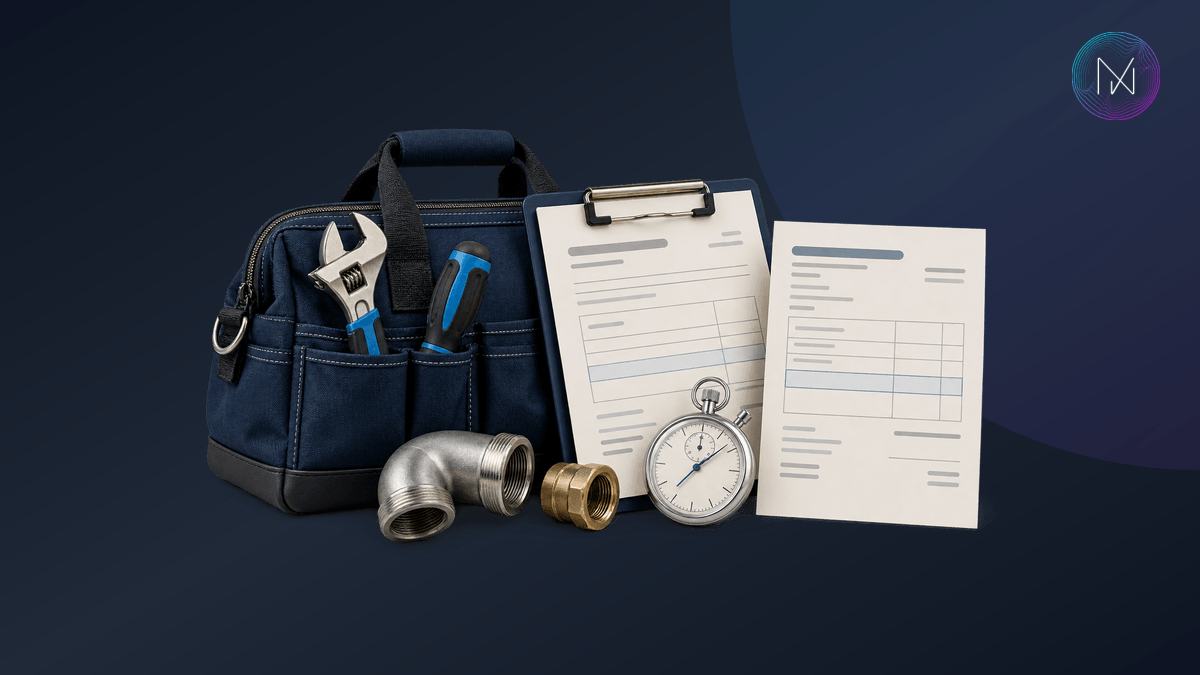
A full diary does not guarantee a healthy service business. Your team can finish jobs, keep customers happy and still leave agreed charges off the invoice.
An extra part is fitted during a visit. Another hour is needed to finish the work. The customer approves a change by email, but that email never reaches the person preparing the bill. Each job looks complete, yet the invoice tells only part of the story.
For owners and managers of installation, maintenance, repair and other service businesses, these gaps deserve attention. Selling more work helps less when the business does not reliably bill for the work already agreed and delivered.
NexWave’s field service solution connects quotations, customer acceptance, field visits and invoicing. That gives your team a shared record of what was agreed, what happened on the job and what should be charged.
Here are five places to review.
1. The quote leaves too much open to interpretation
Before work starts, the customer and your team need the same understanding of the price. Is the whole job fixed price? Will labour and parts be charged from actual use? Does the agreed price cover installation, with additional materials charged separately?
If those decisions are unclear, the office has to interpret the agreement after the work is complete. That can lead to missed charges, invoice queries or discounts to settle a disagreement.
NexWave supports fixed-price, time-and-materials and mixed billing for field service jobs. Mixed billing lets individual quote lines use either an agreed fixed charge or actual recorded quantities.
The benefit is a clearer starting point for the job. Sales, technicians and the billing team can work from the same approved agreement, with a billing method that suits the work.
2. Extra work stays in messages instead of becoming part of the agreement
Consider a repair visit where the customer asks for another part to be replaced. The technician gets approval, completes the extra work and moves to the next job. Later, the office prepares an invoice from the original quote.
The business has supplied more than it bills for. A message confirming the extra work may exist, but someone still has to find it, price it and connect it to the right job.
NexWave lets your team create a variation linked to the accepted quote and the same field service job. The additional work has its own quantities, rates and acceptance record. Customer acceptance can be recorded through the portal or entered by your team when approval comes by phone or email.
This gives approved extras a place in the billing process. Managers can also see which proposed changes still need a customer decision, so those decisions can be resolved before invoicing.
3. Labour and parts are recorded too late
At the end of a busy week, people have to reconstruct which parts went to which customer and how much time each visit took. Details become harder to recover once several jobs sit between the work and the paperwork.
For time-and-materials work, incomplete records leave the billing team without the quantities it needs. For fixed-price work, they make it harder to understand whether the job took more effort than expected.
NexWave field visits hold work notes, time logs and parts used, with technician timers available for recording time. For actual-basis billing, the invoice uses billable quantities from submitted visits at the approved quotation rates.
Recording the work while the details are fresh gives the office something concrete to review. It also reduces the need to interrupt technicians later to reconstruct a job they finished days ago.
4. The final invoice does not match the agreement
An invoice can be wrong even when the team has recorded the work. A fixed-price charge might already include labour that also appears as a separate billable entry. An invoice prepared from a current price list might use a different rate from the one the customer accepted.
These mistakes create extra work for both sides. The customer queries the bill, the office checks the records, and payment may wait while the invoice is corrected.
NexWave’s billing review brings proposed charges, accepted quotes and variations, and recorded field work together before a draft invoice is created. Actual-basis charges use approved quotation rates. The review identifies errors that must be resolved before the draft can be prepared.
For mixed jobs, the team also marks time and parts already covered by fixed-price charges as non-billable. That keeps included work separate from additional charges.
The business gains a clear review point before the invoice reaches the customer, with source records available to explain the charges.
5. Finished jobs wait for someone to start the billing process
The technician considers the job complete. The office is waiting for visit records. A manager is waiting for a decision on extra work. Nobody has a clear view of what must happen next, so the invoice waits.
That is a cash-flow delay even if every charge eventually makes it onto the bill.
NexWave connects job completion to billing readiness. Visits must be submitted or cancelled, required follow-up must be resolved, and the job must pass its completion checks before the billing process can continue. The completed or ready-to-invoice job then gives the office a record from which to review charges and prepare the draft invoice.
Give one person responsibility for reviewing jobs awaiting invoicing. With the agreement and work records linked, that review can focus on the remaining decision or missing record instead of starting an investigation from scratch.
Fixed-price jobs need an effort check too
A fixed-price invoice can match the quote perfectly while the job earns less than expected. Extra visits, additional labour or more parts can use up the allowance behind the original price.
NexWave retains actual time and parts records for fixed-price jobs as well as time-and-materials work. Managers can compare the work delivered with the assumptions behind the quote, then use that experience when pricing the next job.
This is another reason to keep complete service records. They support both today’s billing and tomorrow’s pricing decisions.
Start with a few recent jobs
Choose a small sample of completed jobs and ask:
- Does each job have a clear, accepted pricing agreement?
- Did approved extras reach the invoice?
- Are labour and parts records complete?
- Are fixed-price inclusions kept separate from extra billable work?
- What held up the invoice after the work was finished?
The answers show where a stronger process could make a practical difference. A missed charge needs a better record of approved work. A late invoice may need a clearer handover. Repeated overruns may need a change to how the next job is quoted.
NexWave connects those records through its quote-to-invoice workflow, giving service businesses a clearer path from an accepted price to an invoice the customer can understand.
Book a NexWave demonstration with one recent job in mind. Follow its quote, any approved extras, the recorded time and parts, and the final invoice. See where NexWave can help your team protect billable work and get completed jobs ready for billing.
Follow one job from quote to invoice
Bring a recent service job to a NexWave demonstration. See how approved pricing, extra work, time and parts connect to the final bill.
REQUEST A DEMORelated Articles
What Is a Field Service Management (FSM) Module?
A complete guide to Field Service Management (FSM) modules. Learn what FSM software does, who needs it, core features...
Odoo vs NexWave: Which ERP Fits a Growing New Zealand Business?
Compare Odoo vs NexWave for NZ businesses. See how local experience, flexible customisation and no monthly code maint...